Introduction
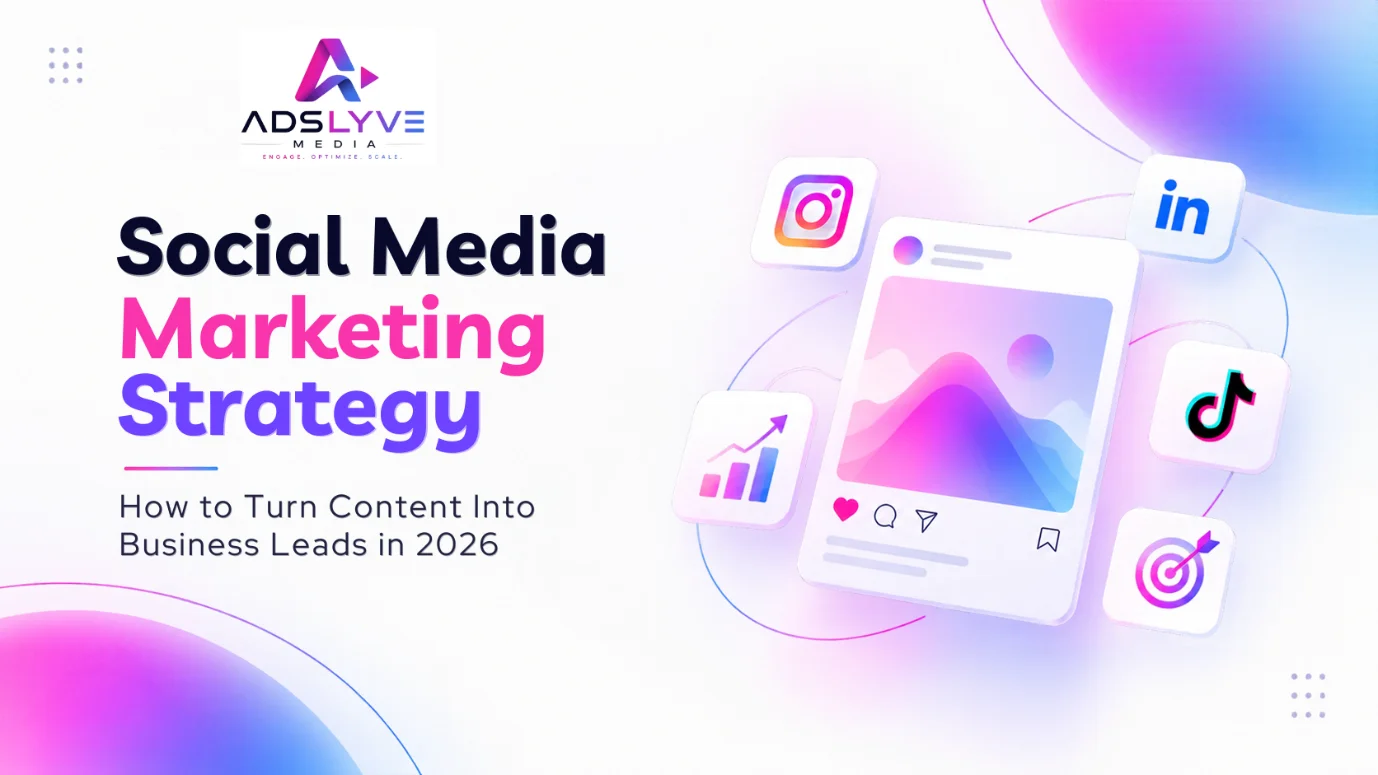
Posting regularly on Instagram, LinkedIn, Facebook, or other social media platforms does not automatically generate business. You can publish attractive graphics, share Reels, and gain followers without receiving a single qualified enquiry.
The problem often isn't the number of posts. It's the absence of a clear social media marketing strategy that connects content with business goals.
In 2026, businesses need more than an active social media profile. They need content that captures attention, communicates their value, builds trust, and encourages potential customers to take action. Social platforms are increasingly important for discovery, while short-form video, authentic storytelling, and search-friendly content are shaping how brands connect with audiences.
Whether you are a startup, a growing company, or an established brand, the right approach can help transform social media from a publishing task into a meaningful lead-generation channel.
What Is a Social Media Marketing Strategy?
A social media marketing strategy is a structured plan that defines what your business will publish, which audiences it wants to reach, which platforms it will prioritize, and how it will measure results.
An effective strategy connects three essential elements:
Content: What your brand communicates through posts, videos, carousels, stories, and campaigns.
Audience: The people most likely to need your products or services.
Business outcomes: The results you want to achieve, such as website visits, enquiries, demo bookings, or sales.
Without this alignment, social media activity can become inconsistent and difficult to measure. A well-planned strategy ensures that each content format serves a purpose within the customer journey.
1. Define Your Target Audience Before Creating Content
One of the most common social media mistakes is creating content for everyone. When your messaging tries to appeal to every audience, it often fails to connect strongly with any particular group.
Start by identifying your ideal customers. Consider their industry, job roles, challenges, purchasing priorities, and the questions they ask before choosing a service provider.
For example, a B2B technology company might target decision-makers who want to improve operational efficiency. Its content should address business challenges, demonstrate expertise, and explain how its solutions deliver value.
A consumer brand, on the other hand, might benefit from product demonstrations, relatable videos, customer stories, and lifestyle content.
Actionable tip: Create three to five audience pain points and develop content around each one. This makes your social media content more relevant and gives potential customers a reason to engage with your brand.
2. Build a Social Media Content Strategy Around Clear Content Pillars
A strong social media content strategy balances education, trust-building, engagement, and conversion. Instead of deciding what to post every morning, establish a few recurring content pillars.
Here are five useful pillars for most businesses:
Educational content: Share practical tips, industry insights, common mistakes, and answers to frequently asked questions.
Brand authority: Publish case studies, expert opinions, process explanations, and original perspectives that demonstrate your expertise.
Humanizing content: Introduce team members, show behind-the-scenes activities, and share the people and processes behind your brand.
Engagement content: Use polls, questions, relatable situations, and interactive posts to encourage meaningful conversations.
Conversion-focused content: Explain your services, address objections, share customer testimonials, and invite prospects to book a consultation or request a quote.
The right mix depends on your audience and objectives. The goal is to give people reasons to discover your business, trust your expertise, and consider working with you.
3. Choose the Right Social Media Platforms
You do not need to maintain every social media platform with equal effort. Focus on the channels where your potential customers are most likely to discover and evaluate your business.
LinkedIn can be useful for B2B companies, professional services, thought leadership, and business networking.
Instagram can support visual storytelling, Reels, product discovery, and brand personality.
Facebook can help businesses build communities, distribute content, and connect organic activity with advertising campaigns.
YouTube can support educational videos, product demonstrations, tutorials, and long-term video discovery.
Choose platforms based on audience behaviour, content capabilities, available resources, and measurable business potential. Publishing strategically on two relevant platforms is often more manageable than creating low-quality content for six.
4. Use Short-Form Videos, Carousels, and Search-Friendly Content
Different content formats serve different purposes. A short video may introduce your brand to a new audience, while a carousel can explain a complex topic or help potential customers evaluate a solution.
Consider using:
Short-form videos: Demonstrate products, answer customer questions, and explain problems your service solves.
Carousel posts: Break down processes, share checklists, and present step-by-step advice.
Static creatives: Communicate key messages, promote offers, and reinforce brand recognition.
Customer stories: Show how your business addresses real challenges.
Expert-led posts: Share useful opinions and insights that demonstrate subject-matter knowledge.
Make content easier to discover by using relevant keywords naturally in captions, video titles, on-screen text, and profile descriptions where appropriate. Avoid stuffing keywords or using irrelevant hashtags.
Social search is an increasingly important part of content discovery, so businesses should consider how customers search for answers on social platforms as well as traditional search engines.
5. Create a Social Media Content Calendar
Consistency becomes easier when content is planned in advance. A social media content calendar helps your team organize topics, formats, publishing dates, campaigns, and calls to action.
A simple weekly calendar might look like this:
Day | Content format | Purpose |
Monday | Educational carousel | Build awareness |
Tuesday | Short-form video | Reach new audiences |
Wednesday | Expert insight or case study | Establish trust |
Thursday | Question, poll, or interactive post | Encourage engagement |
Friday | Service-focused post with CTA | Generate enquiries |
Treat this as a starting framework rather than a universal posting formula. Your schedule should reflect your audience, platform analytics, campaign calendar, and production capacity.
Planning also makes it easier to maintain consistent branding, repurpose content, and connect individual posts to broader marketing campaigns.
6. Turn Social Media Engagement Into Qualified Leads
Engagement is valuable, but it should not be the only measure of success. A post can receive likes and comments without attracting people who are ready to purchase.
To improve lead generation, make the next step clear and relevant to the content.
For example:
An educational post can direct readers to a detailed blog.
A service explainer can invite prospects to book a consultation.
A case study can encourage visitors to request a similar solution.
A downloadable content calendar can help capture leads through a relevant resource.
A customer testimonial can link to a service page with a clear enquiry option.
Ensure that your website landing pages match the message and offer in your social media posts. Keep forms simple, respond to enquiries promptly, and track where leads originate.
For better reporting, measure website clicks, qualified enquiries, conversion rates, and cost per lead where applicable. These metrics provide more actionable insights than follower growth alone.
7. Measure Performance and Improve Your Strategy
A social media marketing strategy should evolve as you learn what works for your audience.
Review performance regularly and look for patterns. Which topics attract the most relevant engagement? Which videos generate profile visits? Which posts send traffic to your website? Which campaigns result in actual enquiries?
Use the answers to refine your content.
For example, if educational carousels consistently drive website visits while generic promotional graphics receive little attention, consider developing more educational content and connecting it to relevant service pages.
Test different hooks, creative formats, messaging, and calls to action. Change one or two variables at a time so you can better understand what influences results.
Most importantly, connect social media reporting to business outcomes. A successful strategy should help your business understand not just what people engage with, but what motivates them to take the next step.
Why Businesses Choose Professional Social Media Content and Strategy Services
Managing social media effectively requires audience research, creative development, copywriting, content planning, publishing, community engagement, and performance analysis. Handling every task internally can become challenging as a business grows.
A professional social media content and strategy partner can help bring these activities together through a consistent, goal-oriented approach.
The right partner should understand your audience, develop content aligned with your brand, maintain a structured calendar, and use performance insights to improve future campaigns.
At Adslyve Media, the focus is on connecting creative execution with broader marketing objectives. Whether your business needs stronger content planning, engaging social media creatives, or a more structured strategy for attracting potential customers, the priority should be content that supports meaningful business outcomes.
Conclusion: Make Every Social Media Post Work Toward a Goal
An effective social media marketing strategy starts with understanding your audience and defining clear objectives. It then brings together relevant content, appropriate platforms, consistent planning, strong calls to action, and ongoing performance measurement.
Instead of focusing only on how frequently your business posts, consider whether each piece of content helps your audience discover your brand, understand your value, trust your expertise, or take a meaningful next step.
When these elements work together, social media becomes more than a communication channel. It becomes a structured part of your business's marketing and lead-generation strategy.
Ready to Build a Smarter Social Media Strategy?
Is your business publishing regularly but struggling to turn social media activity into meaningful enquiries?
Adslyve Media can help you develop a more structured approach to social media content and strategy, aligned with your brand, audience, and business objectives.
Let's build a social media presence that supports your business goals.
Explore Adslyve Media's Social Media Content Services or contact the team to discuss a strategy tailored to your business.